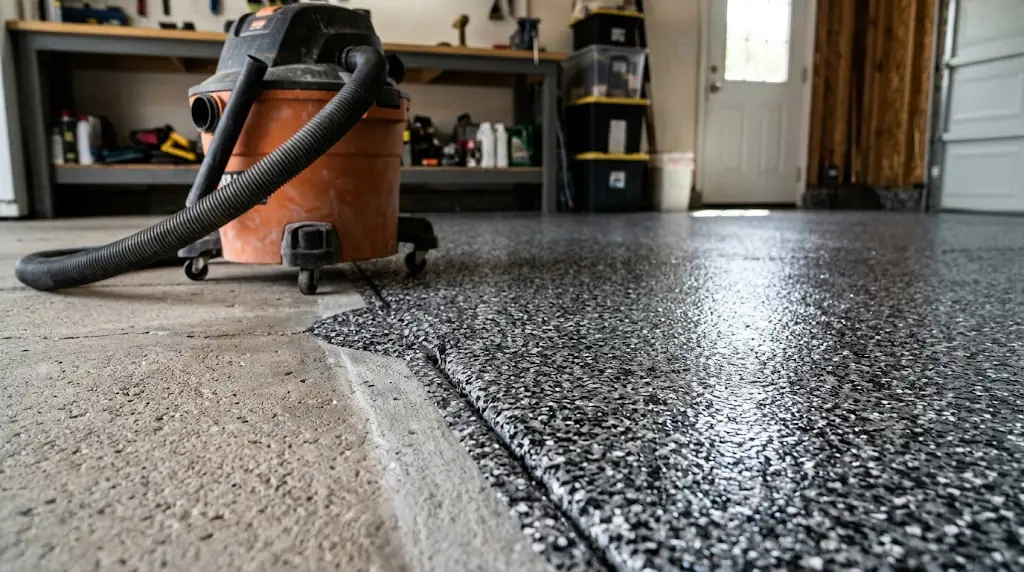
Yes, you can apply professional epoxy over cracked concrete in the Treasure Valley, but the physical cracks must be aggressively routed and structurally filled with a rapid-curing polyurea or epoxy paste before any coating is applied. Pouring liquid epoxy directly over an unpatched, open crack guarantees catastrophic failure, as the resin simply drains into the void, leaving the surface exposed and structurally compromised.
The Reality of Concrete Cracking in Idaho
Concrete cracking is an inevitable structural reality in the Boise Metro Area. When installing a permanent floor coating, contractors must differentiate between standard curing fractures and severe foundation failures. Coating over an improperly diagnosed crack results in the permanent floor membrane tearing down the middle.
| Crack Classification | Root Cause in Idaho | Repair Method Required | Impact on Epoxy Coating |
| Hairline / Shrinkage Cracks | Rapid moisture evaporation during initial concrete curing | Standard routing and polyurea filling | Easily bridged; zero impact once patched |
| Settlement Cracks | Soil shifting and compaction beneath the slab | Deep V-routing and high-tensile epoxy mending | Requires structural stabilization before coating |
| Spalling / Pitting | Freeze-thaw cycles and magnesium chloride road salt | Full surface mechanical grinding and skim-coating | Destroys adhesion; requires total surface leveling |
| Control Joints (Saw Cuts) | Intentional relief cuts made by the builder | Polyurea joint filler (highly flexible) | Must remain flexible; never fill with rigid epoxy |
(Note: The classifications of concrete surface defects align with structural guidelines established by the Portland Cement Association.)
Why Treasure Valley Soils Cause Concrete Movement
Garages in Ada and Canyon counties sit on highly varied terrain. From the sandy, alluvial soils near the Boise River to the rocky, shifting clay in the Boise Foothills, the ground beneath your slab is constantly moving.
- Soil Compaction: Subdivisions in rapidly expanding areas like Star, Kuna, and South Meridian often experience rapid soil settling during the first three years of new construction. As the soil drops, the unsupported concrete slab cracks under the immense weight of parked vehicles.
- Thermal Expansion: During an Eagle or Caldwell summer, daytime highs exceed 100°F, forcing the massive concrete slab to physically expand. This immense thermal pressure forces weak points in the concrete to snap.
- Hydrostatic Pressure: High spring water tables push ground moisture upward. If the moisture freezes during a late cold snap, the expanding ice physically shatters the concrete from the inside out.
The Professional Crack Repair Process
Amateur installers attempt to hide cracks by simply painting a thick layer of epoxy over the gap. This is a fatal installation error. Professional concrete restoration requires aggressive mechanical intervention to ensure the crack is permanently locked together before the foundational primer is applied.
- Chasing the Crack: Installers use a specialized hand grinder equipped with a V-shaped diamond masonry blade. They grind directly into the crack, widening it and exposing clean, unweathered concrete on both inside walls of the fracture.
- Debris Extraction: Industrial HEPA vacuums extract all silica dust and loose gravel from the depths of the routed crack. A clean, dust-free void is mandatory for chemical adhesion.
- Chemical Mending: The crew injects a two-part, rapid-curing polyurea or epoxy crack filler directly into the trench. This material is intentionally overfilled so it crowns above the concrete surface. This structural filler cures harder than the surrounding concrete, permanently welding the two broken slabs back together.
- Flush Grinding: Once the filler hardens (usually in 15 to 30 minutes), the crew runs a massive 500-pound planetary floor grinder over the entire slab. This grinds the overfilled crack perfectly flush with the rest of the floor, making the repair completely invisible under the final coating.
Why DIY Hardware Store Crack Fillers Fail
Homeowners frequently attempt to prep their own concrete by filling cracks with cheap materials from local hardware stores. These consumer-grade products actually repel professional epoxy coatings and destroy the installation.
- Silicone Caulk: Standard silicone caulks are highly elastomeric and chemically resist adhesion. If you fill a crack with silicone, the epoxy basecoat will aggressively repel away from the caulk line, leaving a bald, uncoated stripe across the garage floor.
- Water-Based Patching Compounds: Cheap, premixed concrete patch buckets rely on water evaporation to harden. They possess incredibly low compressive strength. When heavy vehicular traffic rolls over a crack filled with water-based patch, the patch instantly crumbles to dust under the epoxy, causing the coating to cave in and shatter.
- Asphalt-Based Fillers: Black driveway crack fillers are incompatible with indoor resinous coatings. The petroleum in the asphalt filler bleeds through the epoxy primer and chemically destroys the resin cross-linking process.
The Difference Between Cracks and Control Joints
A critical part of concrete preparation involves addressing the deep, perfectly straight lines cut into your garage floor. These are not cracks; they are control joints (or expansion joints).
- The Purpose of Saw Cuts: Concrete builders cut these lines into the slab intentionally. They act as planned structural weak points. When the massive concrete slab inevitably shifts, shrinks, or expands, it will crack cleanly down the hidden bottom of the saw cut rather than fracturing randomly across the center of your garage.
- The Rigid Epoxy Error: Standard industrial epoxy cures into a rigid, dense plastic. If an installer fills these expansion joints with rigid epoxy, they lock the concrete slabs together. The next time the Boise summer heat forces the concrete to expand, the concrete will rip itself apart, violently tearing the seamless floor coating with it.
- The Flexible Polyurea Solution: Professional installers clean out these saw cuts and fill them with a specialized, highly flexible polyurea joint filler. This creates a completely seamless, flush, sanitary floor that is easy to sweep. Because the polyurea is elastic, the concrete slabs can still expand and contract beneath the floor coating without damaging the surface.
Restoring Salt-Damaged and Pitted Slabs
Cracks are not the only surface defect encountered in Idaho garages. Severe winter weather introduces magnesium chloride and road salt onto the floor, resulting in extensive pitting and spalling (where the top layer of concrete literally blows off, leaving a cratered, moon-like surface).
- Grind and Assess: Standard diamond grinding easily removes minor surface flaking. However, deep salt craters require dedicated restoration.
- Skim Coating: For severely degraded slabs in older Nampa and Caldwell homes, the installation crew must apply a full epoxy or cementitious skim coat. This involves troweling a structural resurfacer over the entire square footage of the garage to rebuild the original elevation and create a smooth, pristine canvas for the final flake coating.
Do Not Let Damaged Concrete Deteriorate Further
Leaving cracks open and exposed accelerates structural concrete failure. Every time water from melting snow or a washing hose enters an open crack, it erodes the soil beneath the slab, guaranteeing the crack will only widen and deepen over time. A professional repair and coating system permanently halts this deterioration.
Contact Meridian Epoxy Flooring to stop concrete degradation and restore your failing slab. Visit our contact page today to schedule a free, exact site evaluation and custom crack-repair estimate for your home in Meridian, Boise, Nampa, Caldwell, Eagle, Kuna, or Star.