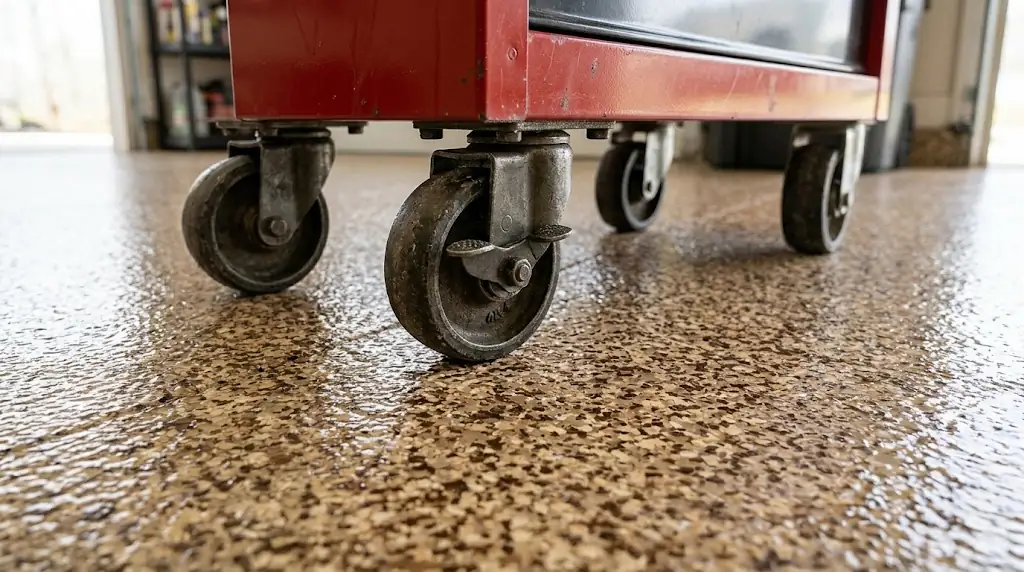
A properly installed, professional-grade epoxy garage floor lasts 15 to 20 years in Treasure Valley homes. In lower-traffic residential garages, high-build polyaspartic and 100% solids epoxy systems can easily exceed two decades before requiring a clear topcoat re-application.
The True Lifespan Timeline for Idaho Garages
Not all epoxy is created equal, and not all concrete endures the same daily abuse. The operational lifespan of your floor coating depends directly on the chemical grade applied, the precise mechanical preparation of the slab, and the specific vehicular traffic in your garage.
| System Type | Average Lifespan (Residential) | Common Failure Points |
| DIY Box-Store Paint Kits | 1 – 3 Years | Hot-tire peeling, winter salt degradation, chipping |
| Standard 100% Solids Epoxy | 10 – 15 Years | Ambering (yellowing) from UV exposure, micro-scratches |
| Epoxy Primer + Polyaspartic Topcoat | 15 – 20+ Years | Extreme blunt force impact (dropping heavy tools) |
| Full-Flake Polyurea/Polyaspartic | 15 – 25 Years | Foundation settling or major concrete cracking |
(Note: These structural lifespan estimates assume professional mechanical concrete grinding and mandatory moisture mitigation testing during installation.)
Why DIY Kits Fail Rapidly in Boise and Meridian
Homeowners frequently attempt to apply hardware-store epoxy paint kits themselves to save money. These water-based products almost universally fail within the first few years when exposed to the extreme environmental and mechanical stresses of the Boise Metro Area.
- Acid Etching Inadequacy: DIY kits rely on acid washing to prepare the concrete. Acid merely cleans the top layer; it does not aggressively open the microscopic pores of the slab. Professional grinding physically profiles the concrete (creating a rough CSP-2 or CSP-3 texture), allowing the epoxy to sink deep into the substrate and create a permanent mechanical bond.
- Water-Based Chemistry: Cheap kits are formulated with up to 50% water or harsh solvents. As the coating cures, the water evaporates, leaving a microscopically thin, weak layer of paint on top of the concrete. Professional 100% solids epoxy contains zero water. It cures at the exact thickness it is poured, creating a rock-hard, impermeable armor over the slab.
- Hot Tire Pick-Up Vulnerability: Summer asphalt temperatures in Nampa and Caldwell easily surpass 140°F. When you park on a cheap DIY floor, the hot tires transfer that heat and melt the thin acrylic paint. As the tires cool and contract overnight, they physically rip the coating right off the concrete.
Environmental Threats to Garage Floors in the Treasure Valley
The lifespan of a concrete floor coating in Southwestern Idaho is directly challenged by the local climate. A professional system is engineered specifically to withstand these intense regional weather patterns and environmental stressors.
- Extreme Temperature Swings: The Boise area experiences aggressive seasonal temperature changes. Summer highs routinely break 100°F, while winter nights plunge well below freezing. This sudden thermal shock forces concrete slabs to expand and contract continuously. High-quality polyurea and epoxy resins possess specific elastomeric properties, allowing them to stretch and flex alongside the shifting concrete without cracking or delaminating.
- Corrosive Winter De-Icers: During harsh Idaho winters, vehicles track magnesium chloride, heavy road salt, and snow sludge into the garage. When this slush melts, it drives highly corrosive chemicals deep into bare, unprotected concrete, causing severe pitting and structural spalling. A seamless epoxy coating acts as an absolute barrier. It completely isolates the concrete slab from these corrosive elements, permanently preventing winter degradation.
- UV Exposure and Ambering: Garages facing south or west in Eagle, Star, and Kuna receive brutal, direct afternoon sun exposure. Standard industrial epoxies lack UV stability. When the sun hits the exposed apron of the garage, the UV rays cause the epoxy to violently yellow and chalk. Advanced polyaspartic topcoats are formulated to be completely UV-stable, ensuring the floor maintains its original clarity and vibrant color profile for decades.
Factors That Accelerate Floor Wear
Even top-tier industrial coatings degrade prematurely if subjected to improper use or catastrophic hidden site conditions.
- High Moisture Vapor Transmission (MVT): Slabs poured over high water tables or areas with poor drainage push hydrostatic pressure upward through the concrete pores. If a moisture-mitigating vapor barrier primer is not applied during the initial installation, this intense pressure will physically push the hardened epoxy off the slab, causing massive blisters and system-wide delamination.
- Abrasive Grinding: Dragging heavy metal floor jacks, moving snowmobiles with steel carbides, or sliding unpadded heavy equipment across the floor creates surface micro-scratches. While the coating itself will not peel, repeated, heavy abrasion severely dulls the gloss finish and degrades the topcoat.
- Harsh Chemical Cleaners: Washing the floor with highly acidic concrete cleaners, bleach, or heavy industrial degreasers strips the protective polyaspartic topcoat over time. Routine maintenance requires only a soft-bristle broom, hot water, and a simple pH-neutral cleaner like clear ammonia.
How to Maximize the Lifespan of Your Garage Floor
Protecting your investment ensures your coated floor lasts its full 20-year potential. Implement these simple, low-effort operational habits to maintain a pristine finish.
- Use Walk-Off Mats: Place heavy-duty rubber mats at the pedestrian entrance into the house. This intercepts sharp driveway gravel and prevents it from being ground across the epoxy surface underfoot.
- Prompt Spill Cleanup: While epoxy and polyaspartic systems are highly chemical resistant, corrosive liquids like DOT 4 brake fluid or battery acid can eventually etch the clear coat if left sitting in a puddle for weeks. Wipe up harsh automotive chemicals immediately with a shop towel.
- Avoid Welding Slag: Direct sparks from MIG or TIG welding burn small, permanent scorch marks right into the clear topcoat. Use a flame-retardant welding blanket or specialized mats to protect the floor in dedicated, high-heat workshop zones.
- Periodic Topcoat Rejuvenation: After 15 years of heavy family use, the base color and structural flake layers remain permanently bonded, but the clear topcoat may look dull, scratched, and weathered. Local contractors can lightly abrade the existing floor and apply a single fresh layer of clear polyaspartic resin. This process completely restores the floor to brand-new condition for a mere fraction of the cost of an initial installation.
Protect Your Concrete Today
The absolute best time to coat a garage floor is right now—before winter road salts and freeze-thaw cycles completely destroy the surface of your unprotected slab. Don’t waste money and weekends on temporary box-store paints that inevitably fail within a single Idaho winter.
Contact Meridian Epoxy Flooring to get a permanent, commercial-grade flooring system installed in your home. Visit our contact page today to schedule a free, exact site evaluation and estimate for properties in Meridian, Boise, Nampa, Caldwell, Eagle, Kuna, and Star.